









| NPPF revisions - more homes can be built near stations? Posted by grahame at 08:53, 19th August 2026 |     |
From the Guardian
Thousands more homes could be built within 10 minutes of transport hubs, including on green belt sites, under a loosening of planning policy announced by Angela Rayner on Monday.
The housing secretary will set out changes to national planning guidance for England that will include an order for councils to have a “default yes” approach to housing developments that are within a reasonable walking distance of well-connected train and tram stations.
If a proposed development is on green belt land, then the government’s “golden rules” state that they must have higher levels of affordable housing, new or improved green spaces, and be supported by the right infrastructure.
The approach was put out to consultation under Rayner’s predecessor, Steve Reed, but the guidance will be confirmed as part of the new national planning policy framework (NPPF) this week.
[snip]
The new NPPF is aimed at providing clearer national policies for plan-making and decision-making, meaning that conflicting local policies will carry less weight when they are inconsistent with national policies.
Other changes will include:
* Stronger support in principle for development, meaning a more explicit presumption in favour of building in sustainable locations.
* Pubs will get protection from being turned into housing or offices with developers having to prove there is no reasonable prospect of keeping a pub as a going concern, including evidence that it was marketed for sale for at least a year.
* A requirement for at least 40% of homes to be accessible on bigger developments and stronger protections for community facilities.
* Stronger support for growth and infrastructure including support for AI growth zones and datacentres.
The housing secretary will set out changes to national planning guidance for England that will include an order for councils to have a “default yes” approach to housing developments that are within a reasonable walking distance of well-connected train and tram stations.
If a proposed development is on green belt land, then the government’s “golden rules” state that they must have higher levels of affordable housing, new or improved green spaces, and be supported by the right infrastructure.
The approach was put out to consultation under Rayner’s predecessor, Steve Reed, but the guidance will be confirmed as part of the new national planning policy framework (NPPF) this week.
[snip]
The new NPPF is aimed at providing clearer national policies for plan-making and decision-making, meaning that conflicting local policies will carry less weight when they are inconsistent with national policies.
Other changes will include:
* Stronger support in principle for development, meaning a more explicit presumption in favour of building in sustainable locations.
* Pubs will get protection from being turned into housing or offices with developers having to prove there is no reasonable prospect of keeping a pub as a going concern, including evidence that it was marketed for sale for at least a year.
* A requirement for at least 40% of homes to be accessible on bigger developments and stronger protections for community facilities.
* Stronger support for growth and infrastructure including support for AI growth zones and datacentres.
Lisa and I were at a meeting last night ... and from a speaker there, we understand that there is now a requirement on developers and others putting plans forward to liaise and agree (where possible?) with neighbouring plans in order to avoid or at least reduce conflicts and barriers between neighbouring developments. I also understand from other sources that powers are removed / reduced for local councillors wanting to "call in" contentious plans in their areas to planning commitees.
For major projects and for regional planning, the changes to the NPPF (this is not the first) and other planning laws and regulations are a significant nuisance and added cost. Witness the Wiltshire Local Plan which looked good ... but by the time it came to the inspectors was so out of date as to not be acceptable; a decade of work "thrown away", a gap left in local guidance, and a reduction (but not an extinguishing) of the Neighbourhood Plan.
There seems to be contradiction in the government lines here ... on one hand, it's all about devolving things to the regions, but on the other hand the regions are having their authority to decide their own direction overruled by central government.
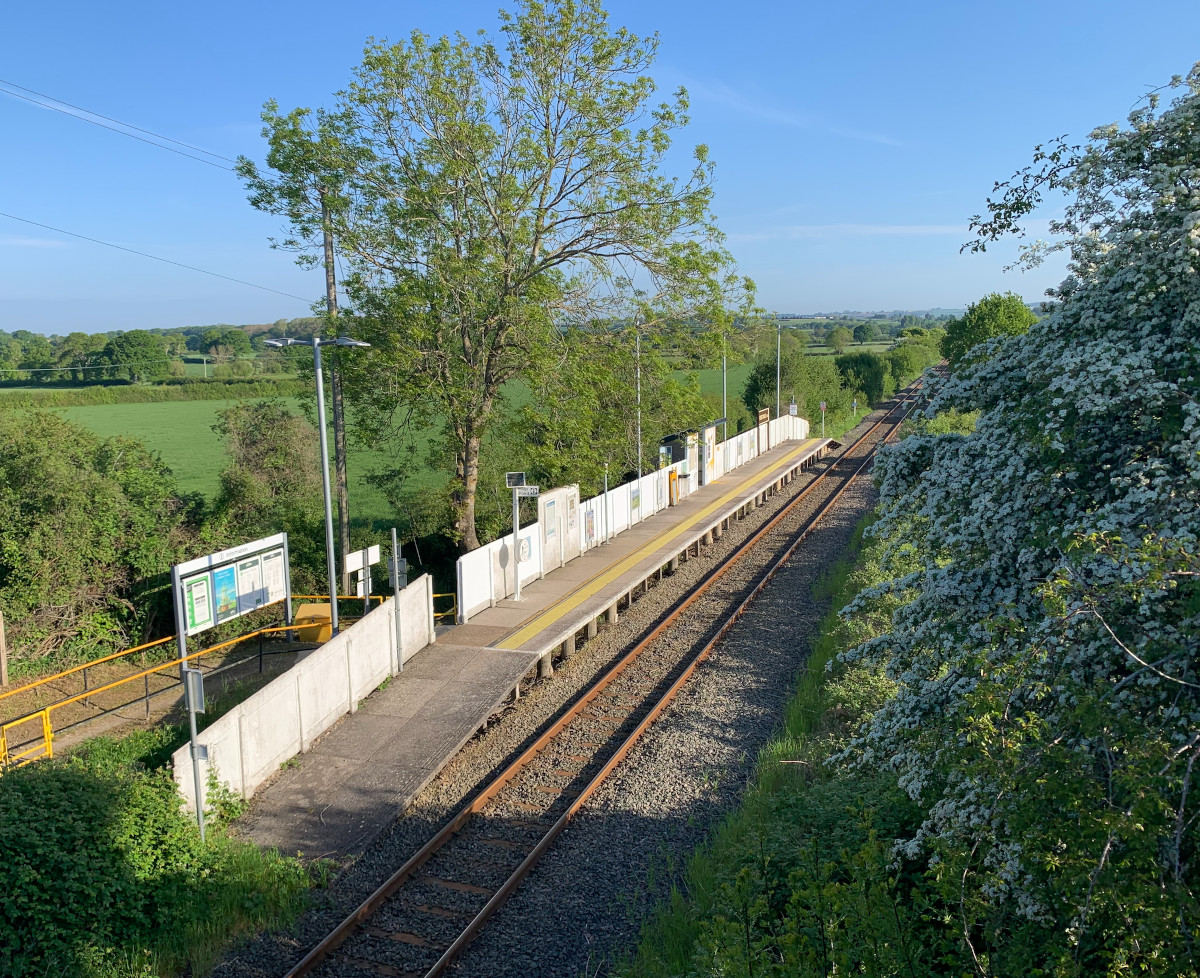
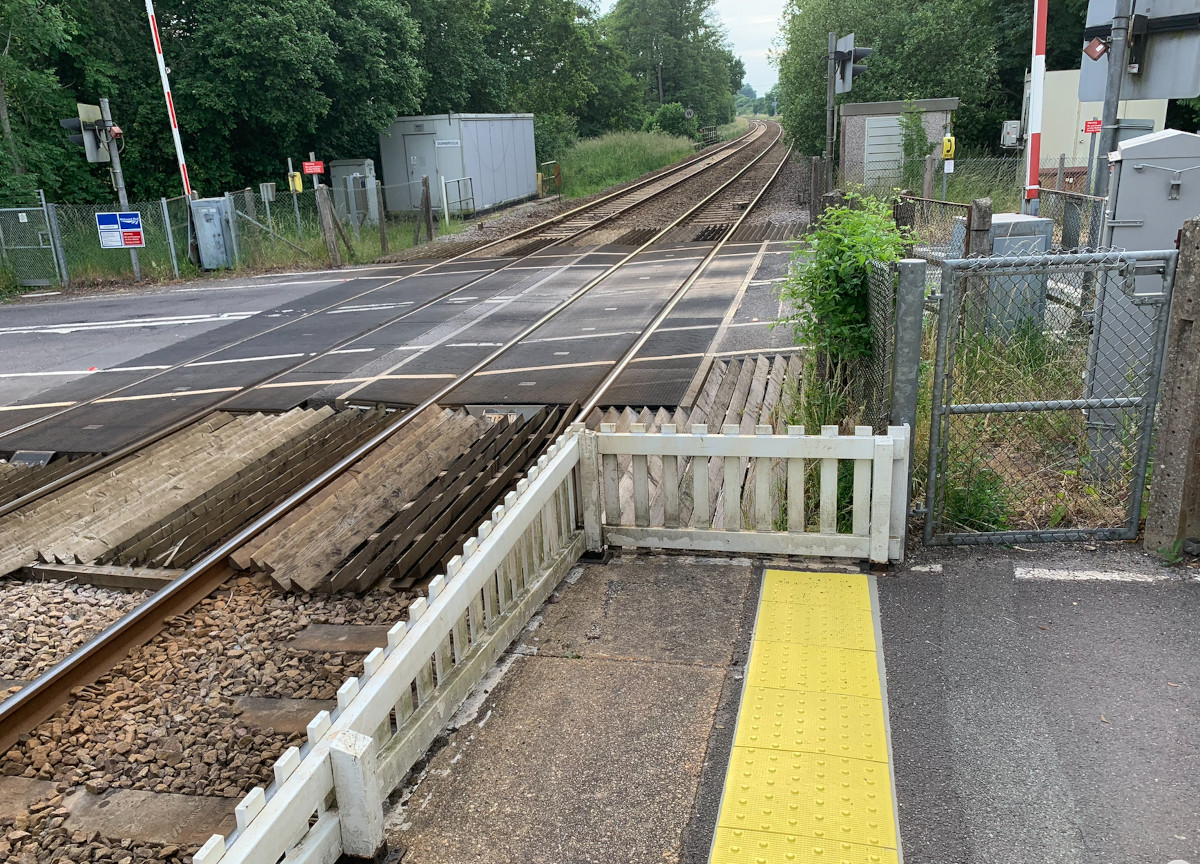
A West Country scene to be changed by central government?
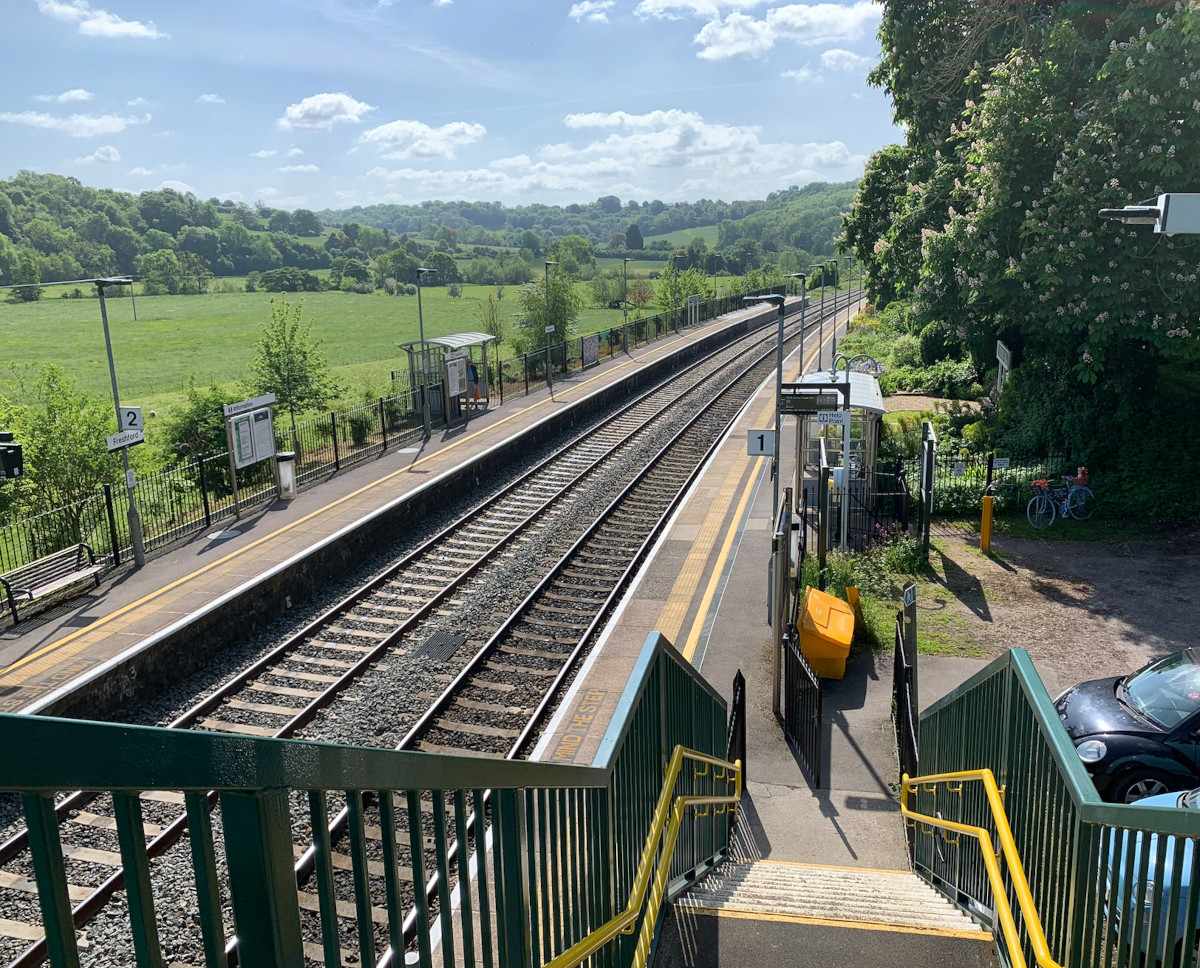
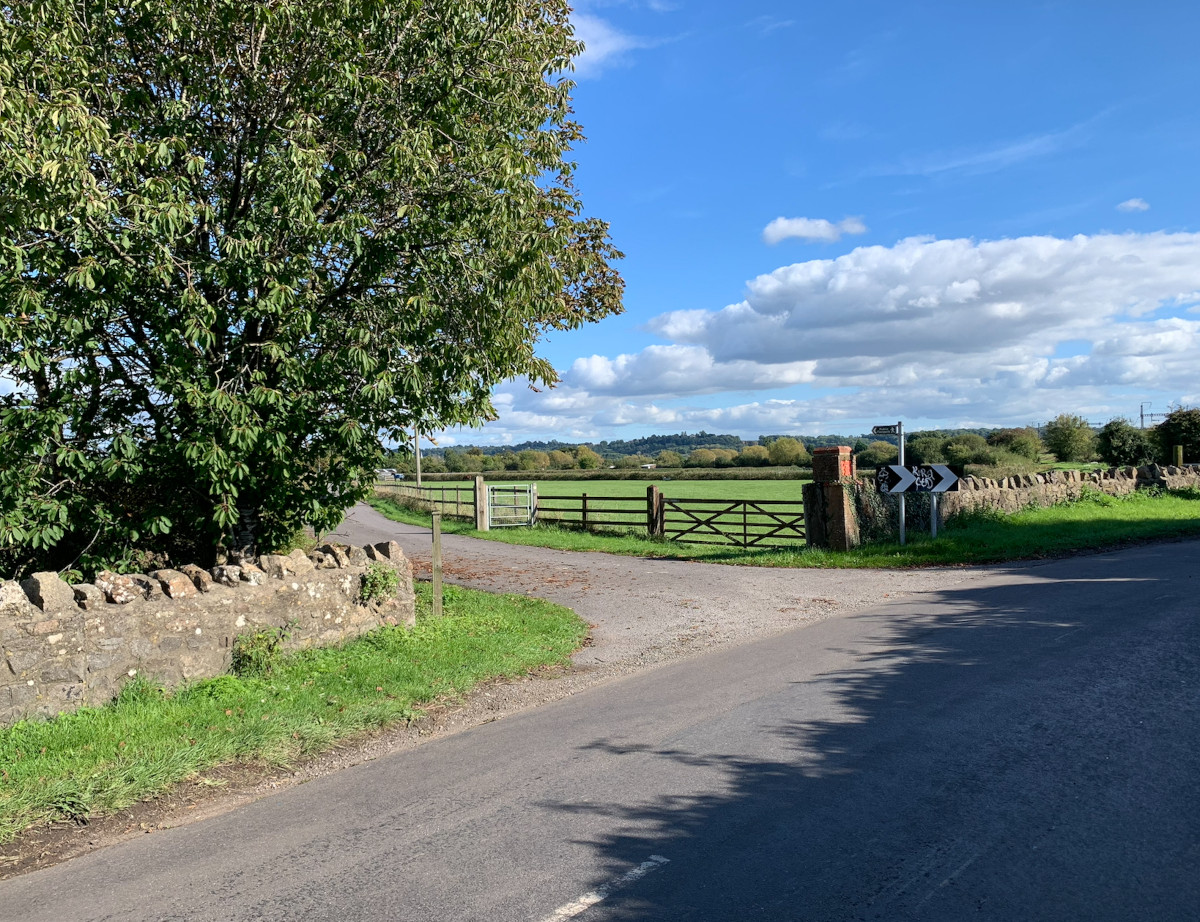
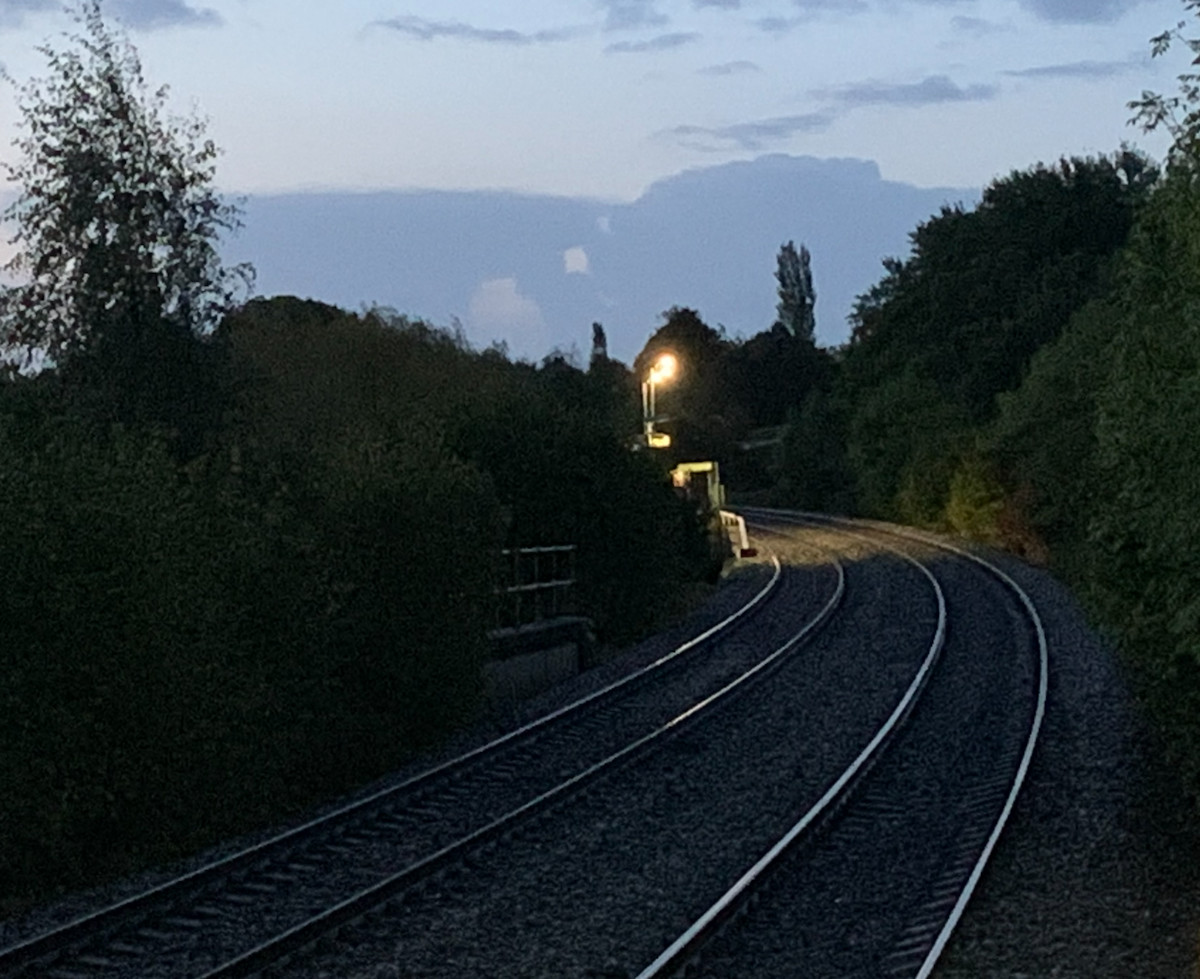
And some others ...
| Re: NPPF revisions - more homes can be built near stations? Posted by GBM at 10:26, 19th August 2026 | |
The two line station picture (number 2) - Melksham in 2030?
| Re: NPPF revisions - more homes can be built near stations? Posted by Ralph Ayres at 12:07, 19th August 2026 | |
All very well having a station within easy walking distance, but without other local amenities it will tend to be nothing but a dormitory, with residents catching the train to work if it goes the right way and driving everywhere else. The main complaint from existing residents - after the loss of countryside - is often that such developments will overload local schools, doctors, sewage processing etc without any compulsion for the developer to include these things.
| Re: NPPF revisions - more homes can be built near stations? Posted by ChrisB at 21:10, 19th August 2026 | |
Yep - no warning, NPPF was changed on Monday.
https://www.gov.uk/government/news/full-steam-ahead-to-fast-track-more-homes-near-stations
| Re: NPPF revisions - more homes can be built near stations? Posted by Chris from Nailsea at 22:47, 19th August 2026 | |


| Re: NPPF revisions - more homes can be built near stations? Posted by Trowres at 22:56, 19th August 2026 | |
How many stations are there that are:
a) outside settlements or in green belt AND
b) served by at least 4 trains per hour?
Would the policies listed in NPPF apply just to areas around existing stations or could a developer pay for a new one in order to make use of the NPPF rules? (though the new station would itself be subject to planning...)
| Re: NPPF revisions - more homes can be built near stations? Posted by grahame at 06:42, 20th August 2026 | |
How many stations are there that are:
a) outside settlements or in green belt AND
b) served by at least 4 trains per hour?
Would the policies listed in NPPF apply just to areas around existing stations or could a developer pay for a new one in order to make use of the NPPF rules? (though the new station would itself be subject to planning...)
a) outside settlements or in green belt AND
b) served by at least 4 trains per hour?
Would the policies listed in NPPF apply just to areas around existing stations or could a developer pay for a new one in order to make use of the NPPF rules? (though the new station would itself be subject to planning...)
I have not (yet?) read the new NPPF - is the 4 trains an hour specified? Each way or a 30 minute service? Possible by stopping trains that already go through but don't stop? Looking at the line from London to Penzance, I would look at ... Kintbury, Bedwyn, Castle Cary, Tiverton Parkway, Menheniot, Bodmin Parkway, Lostwithiel, Par and St Erth as stations that may fit the criteria. Others across the GWR area which have at least 4 trains an hour passing through and that come to my mind are Avoncliff, Freshford, Newton St Cryes, Pilning, Dean and Mottisfont.
| Re: NPPF revisions - more homes can be built near stations? Posted by Trowres at 17:44, 20th August 2026 | |
I have not (yet?) read the new NPPF - is the 4 trains an hour specified? Each way or a 30 minute service? Possible by stopping trains that already go through but don't stop? Looking at the line from London to Penzance, I would look at ... Kintbury, Bedwyn, Castle Cary, Tiverton Parkway, Menheniot, Bodmin Parkway, Lostwithiel, Par and St Erth as stations that may fit the criteria. Others across the GWR area which have at least 4 trains an hour passing through and that come to my mind are Avoncliff, Freshford, Newton St Cryes, Pilning, Dean and Mottisfont.
The NPPF refers to "well-connected stations" for which the following definition is provided:
Well-connected station: Railway stations and underground, tram and light rail stops located
within a top 80 Travel to Work Area located partially or fully within England by Gross Value
Added (GVA) and which, in the normal weekday timetable, are served (or have a
reasonable prospect of being served due to planned upgrades or through agreement with the
rail operator) throughout the daytime by at least four trains or trams per hour overall, or at
least two trains or trams per hour in any one direction.
within a top 80 Travel to Work Area located partially or fully within England by Gross Value
Added (GVA) and which, in the normal weekday timetable, are served (or have a
reasonable prospect of being served due to planned upgrades or through agreement with the
rail operator) throughout the daytime by at least four trains or trams per hour overall, or at
least two trains or trams per hour in any one direction.
I'm struggling with the last part; the criteria would be met of there were two trains toward the workplace hub, but none back? Or was it put in to refer to loop lines (like in Liverpool) where you only need trains in one direction around the loop?
| Re: NPPF revisions - more homes can be built near stations? Posted by ChrisB at 19:40, 20th August 2026 | |
Two tph in the peak direction?....
| Re: NPPF revisions - more homes can be built near stations? Posted by grahame at 08:32, 21st August 2026 | |
Two tph in the peak direction?....
I've been reading into this a bit more - a blog from Lichfields - in particular, travel-to-work areas, distances from stations, and services there.
The top 60 travel to work areas in England have been expanded to 80 and notable additions in the South West are Trowbridge, Newbury, Poole and Cheltentham. Most of the South East and Central Southern England is included, but further South West only the south of Devon through to Plymouth makes the grade. Notably, Bath and Salisbury are not included. Station service wise, the specification is two trains per hour acheievable in the peak direction, and we are looking as I read it as development totally within 800 metres of the station.
Where does that leave us in our region? If there are sites near existing town stations such as Trowbridge, there's an assumption to favour development, as there is near Dilton Marsh and Avoncliff, both of which have multiple peak hour trains that could call. Freshford is in the Bath travel to work area which is not a top one, and I question for Melksham as to whether 2 trains per hour can be achieved in "peak" direction - towards the named town in the area, perhaps, with a gap from 06:29 to 09:09 and nothing running through that could have a stop added. We do have 2 trains in the hour to Chippenham and Swindon - 07:21 and 08:02 and I wonder if they meet the criterion even though going out of area?
Looking wider in the Bristol region, Pilning seems to be an obvious choice with 4 (and soon to be 5?) trains per hour passig through with 2 each to Parkway and to Temple Meads which could have a stop added easily enough, and a lot of presently-green fields close to the station. The NPPF talks about travel TO work area and from comments I have seen nothing about travel FROM work, so it would appear that for people going home to Pilning, a bus from Severn Beach or doubling back at Severn Tunnel Junction would allow the presumtion to allow development to be met.
Futher afield still, stations I identified earlier at Menheniot, St Erth and Bedwyn are outside designated travel to work areas, but Mottisfont and Kintbury are in. Don't know about Dean - the trains stop in a top TTWA but the passenger exit is outside it.
| Re: NPPF revisions - more homes can be built near stations? Posted by Trowres at 15:58, 21st August 2026 | |
Two tph in the peak direction?....
Do you mean "in the direction to which most people would be travelling" ?
The frequency of services, be it 2 or 4, had to be maintained "throughout the daytime"; whatever that means (longer in the summer?).
| Re: NPPF revisions - more homes can be built near stations? Posted by ChrisB at 16:08, 21st August 2026 | |
Yes;....so would apply if the service swapped direction midway through the day to maintain peak flow of 2tph....
| Re: NPPF revisions - more homes can be built near stations? Posted by grahame at 16:32, 21st August 2026 | |
Yes;....so would apply if the service swapped direction midway through the day to maintain peak flow of 2tph....
That's the old fashioned way of doing it? I remember from my commutes to school seeing a succession of trains in the morning peak coming up from Ashford and Hastings through Sevenoaks and Orpington headed for Cannon Street and Charing Cross. During the day, the overnight-empty shed at Grove Park and the sidings on Blackfriars Bridge were populated with 12 carriage trains, which in the evening headed out of town again having filled up with the same people they brought in that morning at one of the two termini. During the day, services to / from Hastings were just hourly, just (!) 6 carriages, and all stations too once they got out beyond Tonbridge.
| Re: NPPF revisions - more homes can be built near stations? Posted by Trowres at 17:54, 21st August 2026 | |
...
The top 60 travel to work areas in England have been expanded to 80 and notable additions in the South West are Trowbridge, Newbury, Poole and Cheltentham. Most of the South East and Central Southern England is included, but further South West only the south of Devon through to Plymouth makes the grade. Notably, Bath and Salisbury are not included. Station service wise, the specification is two trains per hour acheievable in the peak direction, and we are looking as I read it as development totally within 800 metres of the station.
...
The top 60 travel to work areas in England have been expanded to 80 and notable additions in the South West are Trowbridge, Newbury, Poole and Cheltentham. Most of the South East and Central Southern England is included, but further South West only the south of Devon through to Plymouth makes the grade. Notably, Bath and Salisbury are not included. Station service wise, the specification is two trains per hour acheievable in the peak direction, and we are looking as I read it as development totally within 800 metres of the station.
...
There is no mention of the word "peak" in the Lichfields report (nor in NPPF).
But, it was your reference to Trowbridge, Bath and Salisbury that was the eye-opener. My first thought (well, almost...) was:
"what were the designers of the station criteria trying to achieve?"
Firstly, the NPPF section we're concerned with here is covering developments outside settlements.
Exactly how settlement boundaries are calculated is a bit arcane, but I'm assuming that NPPF is relying on existing methods that do tend to produce something that appears intuitively right.
It's the development that has to outside the settlement, not the station. So, we could be looking at (for example) Castle Cary, where the station in in the fields, or we could be considering any station in a village or small town where an 800 metre walk could get you from the development to the station. Even a larger town, where the station is off-centre (Melksham?).
We've already discussed the service frequency. Whatever the detail, it's sensible for the policy to only permit development where the station is somewhat useful.
Now, why top 80 Travel-to-Work areas for GVA?
First thing to understand is where the TTW area concept comes from. According to Wikipedia https://en.wikipedia.org/wiki/Travel_to_work_area:
A travel to work area is a collection of wards for which "of the resident economically active population, at least 75% actually work in the area, and also, that of everyone working in the area, at least 75% actually live in the area".
I have no idea how the two criteria are manipulated in such a way that nowhere is left out of a TTW, but the resulting map can be seen at https://geoportal.statistics.gov.uk/documents/534c0129bdc14be5aa270a919668a3d4/explore
It mostly looks sort-of-realistic, although the Merthyr Tydfil TTW area, for example, looks unnatural (for want of a better term).
The TTWs represent areas with a high degree of self-containment; people both work and live in the same TTW.
However, there is a huge difference in the working population contained within these TTWs, which naturally affects the GVA obtained in each.
There's also a variation in the per-capita GVA: somehow, Swindon TTWA beats London into 2nd place and Salisbury, Trowbridge, Bath and Taunton come in that (decreasing GVA/cap) order in the 2023 data

While the productivity (GVA/cap) is notable, I think the population variation between TTWAs is more significant. It appears that Bath TTWA has about three-quarters of the working population of Trowbridge TTWA.
What does this mean for the chances of station-related development? To be in the top 80 GVA list, your TTWA could be:
* an area of high population density
* an area that is not surrounded by competing work locations that eat into the size of the TTWA (and hence population and GVA - bye bye Bath)
* an area that is not so rural that the TTWA population is below (say) 100k (that's Taunton out...)
The TTWA criterion gives some odd results: Poole TTWA is OK for station-related development but Weston-S-M is not.
Thus, in summary, our hypothetical developer is looking for:
* A station in the fields or near the edge of an existing town;
* ... that has a frequent service to somewhere-or-other
* ... in an area that already has a high population and is not surrounded by other workplace destinations (so where are the trains going?).
"what were the designers of the station criteria trying to achieve?"
I still don't know.

| Re: NPPF revisions - more homes can be built near stations? Posted by ChrisB at 20:12, 21st August 2026 | |
Houses without requiring planning consent
| Re: NPPF revisions - more homes can be built near stations? Posted by Trowres at 21:12, 21st August 2026 | |
Houses without requiring planning consent
They'd still need planning consent in consideration of other issues, would they not, as the following extract from NPPF says:
These should be approved, unless the benefits of doing so would be substantially outweighed by any adverse effects, when assessed against the national decision-making policies in this Framework
The NPPF is, I think, trying to say: "Developments outside settlement boundaries are usually a bad thing, but if there's a useful railway station nearby, we can say that the development is actually OK".
What I'm having trouble in deciding is whether or not the "Top 80 GVA" rule is actually doing anything useful.
| Re: NPPF revisions - more homes can be built near stations? Posted by ChrisB at 21:26, 21st August 2026 | |
rubber stamping I reckon
| Re: NPPF revisions - more homes can be built near stations? Posted by grahame at 04:48, 22nd August 2026 | |
Houses without requiring planning consent
They'd still need planning consent in consideration of other issues, would they not, as the following extract from NPPF says:
These should be approved, unless the benefits of doing so would be substantially outweighed by any adverse effects, when assessed against the national decision-making policies in this Framework
The NPPF is, I think, trying to say: "Developments outside settlement boundaries are usually a bad thing, but if there's a useful railway station nearby, we can say that the development is actually OK".
What I'm having trouble in deciding is whether or not the "Top 80 GVA" rule is actually doing anything useful.
I would agree.
With (any) development there will be positive and negative factors and planning discussions result not in a "100% yes" or "100% no" agreed outcome. The various elements of the NPPF we're talking about help swing some of the factors - give extra weight to some of the elements and perhaps substantial weight that makes a difference in some cases.
I see that the Conservative-elected, Reform-representing MP for Bedwyn and Pewsey is making the local press concerning the NPPF for those two stations and the Wiltshire Gazette article has a picture of an IET at a rural-looking Bedwyn station. But then as I read the maps, Bedwyn is just outside a top 80 area. Those are potentially an interesting watch from the sidelines.
Across the South West, most of our MPs represent parties who are not part of the government - Conservative, Liberal Democrat, Reform and Green - and they have the luxury of being able to represent their electorate without facing the hard national consequences where difficult choices which are in the country's intrerest but not in the interest of the views of their electorate, and you might expect pushback from a wide variety of places. As I understand it, these "station rules" are only one element, and factors like building on flood plains (and railways tend to follow rivers) are still significant to put it mildly.
The "Top 80" rule does help exclude places like Lelant Saltings - there might a station there, it might be practical to stop 2 trains an hour each way, and there might be unused close to the station - but the question to be asked is "travel to WHAT work?"
| Re: NPPF revisions - more homes can be built near stations? Posted by REVUpminster at 07:27, 22nd August 2026 | |
Torbay Council have proposals to develop Paignton Station and car park, the short term car park opposite, and the bus station into flats. A new multi-story car park would be built out of site behind the library in Station Lane. The are plans for flats at Victoria Square within a stones throw of the station and is a temporary car park now.
I've also thought housing could be developed at Yeoford. Trains every half an hour, roads are terrible. It would need track infrastructure improvements which GWR wouldn't do unless someone else pays. Maybe the new GBR would?
| Re: NPPF revisions - more homes can be built near stations? Posted by grahame at 08:26, 22nd August 2026 | |
I've also thought housing could be developed at Yeoford. Trains every half an hour, roads are terrible. It would need track infrastructure improvements which GWR wouldn't do unless someone else pays. Maybe the new GBR would?
Not so much track as a second platform?
The only think we know about the "real" next GBR generation is that we don't know what it will bring ...
| Re: NPPF revisions - more homes can be built near stations? Posted by REVUpminster at 12:44, 22nd August 2026 | |
I've also thought housing could be developed at Yeoford. Trains every half an hour, roads are terrible. It would need track infrastructure improvements which GWR wouldn't do unless someone else pays. Maybe the new GBR would?
Not so much track as a second platform?
The only think we know about the "real" next GBR generation is that we don't know what it will bring ...
I've lost all faith in GWR in the southwest unless someone else is paying.
Paignton station since the fire which still hasn't fully opened platform 2 for nine car trains. Supposed to be next week. The ticket hall and booking office don't look to be open for weeks. The damage was smoke related. The frontage has been boarded up across the car park. The toilets on platform 2 in a shed further along have been open when staff are present. There is a new back door fire escape to the staff accommodation that has been installed since the fire. The repairers don't work weekends; no urgency.
On a Saturday the toilets close at 1630 and the staff all go by 1700; yet that station is still busy. All the tour trains and their has been one virtually every Saturday and some midweek all depart about 1730. Because they cannot stop in platform 2 to pick up (11 coaches and a diesel at each end) Paignton has lost a lot of business.
| Re: NPPF revisions - more homes can be built near stations? Posted by IndustryInsider at 13:41, 22nd August 2026 | |
Yeoford has second platform that only needs re-instating. GWR would probably quote £10m.
I've lost all faith in GWR in the southwest unless someone else is paying.
I've lost all faith in GWR in the southwest unless someone else is paying.
Why would GWR be asked to quote on the second platform reinstatement at Yeoford?
Anyway, having visited Yeoford I really can't see how this is ever likely to happen. There's not much of a problem reinstating the platform itself, but I am sure the residents of a small, lovely and charming sleepy village would object strongly to a load more housing being plonked in a place that sits in a natural valley. The tight winding roads in and around the station would then see more traffic and to turn it into a place which is the size to justify a service every 30-minutes to Crediton and Exeter and an hourly service to Okehampton would need hundreds of new houses completely destroying the character of the small village.
None of the narrow roads without footpaths leading to the station can be easily widened and I'm sure modern planning regulations would insist on expensive upgrades to ensure pedestrian safety immediately around the station.
As you mention, the pathing is very tight between Exeter and Crediton and with the Okehampton service having a little as 5 minutes turnaround, so there would need to be further infrastructure improvements to support the 3-4 minutes additional time the line would be occupied between Crediton and Okehampton per hour if the train was to stop in each direction.
I'd estimate at least £25m. Money that would be much better spent elsewhere.
| Re: NPPF revisions - more homes can be built near stations? Posted by REVUpminster at 15:02, 22nd August 2026 | |
Isn't that what this planning change is all about; more housing.
As for infrastructure move the crossing to Coleford junction to make a dual track and not two single tracks. It should have been done when the original Okehampton was improved. It would benefit Barnstaple travellers as well.
Isn't Newton St Cyres already ear marked for housing? Yeoford, Crediton, Newton St Cyres will all come under the new Greater Exeter.
| Re: NPPF revisions - more homes can be built near stations? Posted by IndustryInsider at 17:53, 22nd August 2026 | |
Isn't that what this planning change is all about; more housing.
Yes. More housing in sensible locations.
As for infrastructure move the crossing to Coleford junction to make a dual track and not two single tracks. It should have been done when the original Okehampton was improved. It would benefit Barnstaple travellers as well.
Moving the crossing will also mean changing/upgrading all the signalling on the line which is currently operated locally from Crediton Signal Box with tokens. Perhaps that might make sense if the equipment is being replaced anyway, but will come at quite a cost otherwise. Opening the line to Okehampton would not have happened if the cost of those works had been included at the time.
All this to give a tiny constrained village station a second train per hour.
| Re: NPPF revisions - more homes can be built near stations? Posted by Chris from Nailsea at 07:29, 23rd August 2026 | |
From the BBC:
Mayors to get powers to overrule local councils on planning decisions
Mayors across England will be given new powers to overrule local councils on some planning decisions.
The change would apply to proposals with more than 150 homes, more than 15,000 square metres of commercial space or buildings over 30 metres.
Mayors in 13 areas including Manchester, Liverpool, the West of England and the West Midlands will gain similar powers to Sir Sadiq Khan in London, who is already able to "call in" planning decisions.
Housing minister Matthew Pennycook said the powers were an "essential part of the toolkit that mayors need to effectively deliver new homes and regeneration".
The Conservatives questioned whether it was right for councils to lose the "ability to make planning decisions in their own communities".
The powers will also be available to mayors in the Combined Authorities in North East England, South Yorkshire, West Yorkshire, York and North Yorkshire, Hull and East Yorkshire, Greater Lincolnshire, Cambridgeshire and Peterborough, East Midlands, and Tees Valley.
Housebuilding has fallen in London in recent years, but Pennycook insisted the "call in" powers had helped the mayor "unblock strategic growth sites" in the capital.
In the 2024 general election, the Labour government promised to build 1.5 million homes in England by the end of the decade but housebuilders have warned the target could be missed.
Pennycook said the government was "absolutely determined to stick with that ambition". He acknowledged the target was "really stretching" but said nearly 180,000 children were in temporary accommodation and "any smaller target wouldn't be commensurate with the scale of the challenge".
In addition to gaining the new "call-in" powers, mayors are set to be able to grant "up-front permission", which the government says will allow building to begin "without a developer having to apply".
A consultation on how the powers will work is due to be published next week.
The government has sought to stress that local councils will continue to decide the majority of applications and that all decisions must still follow planning rules. It has also said mayors will get a "bigger say" over how housing funding is spent in their area, with the government directing national agency Homes England to focus on local mayors' priorities.
New Prime Minister Andy Burnham, who served as mayor for Greater Manchester for nearly a decade, has repeatedly expressed his desire to transfer more powers to local mayors. "Challenge does need to be made to local decision-making and actually it cuts both ways," he told the Sunday Times. "Sometimes it's the other way round. It's the local authority putting forward something that's unacceptable in terms of the impact on the community. It's a two-way street."
Last month, Burnham promised to give all mayors a share of income tax revenue, saying he wanted to "bring power home" to "every postcode". Earlier this week, he announced a secondment programme to send high-performing civil servants to work in mayoral offices.
The approach has faced criticism from some in his own party and the Liberal Democrats, who fear it could create a "two-tier system" that discriminates against those areas that do not have an elected mayor.
Responding to the new powers for mayors, Sir James Cleverly, the shadow housing secretary, said the government was "simultaneously stripping councils across the country of their ability to make planning decisions in their own communities, while making it easier to build traveller sites against local wishes".
Sir James also suggested Labour mayors had failed to meet housing targets, adding: "The Conservatives are the only party with a plan to get Britain building and moving again with our plan to scrap stamp duty on the family home."
Gideon Amos, the Liberal Democrat housing and planning spokesperson, said "taking powers away from communities and local councillors is taking powers away from local people. Instead of silencing residents and handing mayors a blank cheque, the government should be empowering local councils with the resources to deliver genuinely affordable homes alongside the infrastructure to support them," he added.
Mothin Ali, deputy leader of the Greens, said "more powers for mayors to direct local councils" was "more tinkering from the Labour government when local authorities continue to be forced by government into austerity budgets".
Reform UK accused Labour of "centralisation in disguise", saying: "Westminster is stretching its tentacles outward instead of giving real power, resources and decision-making capabilities to devolved authorities."
Mayors across England will be given new powers to overrule local councils on some planning decisions.
The change would apply to proposals with more than 150 homes, more than 15,000 square metres of commercial space or buildings over 30 metres.
Mayors in 13 areas including Manchester, Liverpool, the West of England and the West Midlands will gain similar powers to Sir Sadiq Khan in London, who is already able to "call in" planning decisions.
Housing minister Matthew Pennycook said the powers were an "essential part of the toolkit that mayors need to effectively deliver new homes and regeneration".
The Conservatives questioned whether it was right for councils to lose the "ability to make planning decisions in their own communities".
The powers will also be available to mayors in the Combined Authorities in North East England, South Yorkshire, West Yorkshire, York and North Yorkshire, Hull and East Yorkshire, Greater Lincolnshire, Cambridgeshire and Peterborough, East Midlands, and Tees Valley.
Housebuilding has fallen in London in recent years, but Pennycook insisted the "call in" powers had helped the mayor "unblock strategic growth sites" in the capital.
In the 2024 general election, the Labour government promised to build 1.5 million homes in England by the end of the decade but housebuilders have warned the target could be missed.
Pennycook said the government was "absolutely determined to stick with that ambition". He acknowledged the target was "really stretching" but said nearly 180,000 children were in temporary accommodation and "any smaller target wouldn't be commensurate with the scale of the challenge".
In addition to gaining the new "call-in" powers, mayors are set to be able to grant "up-front permission", which the government says will allow building to begin "without a developer having to apply".
A consultation on how the powers will work is due to be published next week.
The government has sought to stress that local councils will continue to decide the majority of applications and that all decisions must still follow planning rules. It has also said mayors will get a "bigger say" over how housing funding is spent in their area, with the government directing national agency Homes England to focus on local mayors' priorities.
New Prime Minister Andy Burnham, who served as mayor for Greater Manchester for nearly a decade, has repeatedly expressed his desire to transfer more powers to local mayors. "Challenge does need to be made to local decision-making and actually it cuts both ways," he told the Sunday Times. "Sometimes it's the other way round. It's the local authority putting forward something that's unacceptable in terms of the impact on the community. It's a two-way street."
Last month, Burnham promised to give all mayors a share of income tax revenue, saying he wanted to "bring power home" to "every postcode". Earlier this week, he announced a secondment programme to send high-performing civil servants to work in mayoral offices.
The approach has faced criticism from some in his own party and the Liberal Democrats, who fear it could create a "two-tier system" that discriminates against those areas that do not have an elected mayor.
Responding to the new powers for mayors, Sir James Cleverly, the shadow housing secretary, said the government was "simultaneously stripping councils across the country of their ability to make planning decisions in their own communities, while making it easier to build traveller sites against local wishes".
Sir James also suggested Labour mayors had failed to meet housing targets, adding: "The Conservatives are the only party with a plan to get Britain building and moving again with our plan to scrap stamp duty on the family home."
Gideon Amos, the Liberal Democrat housing and planning spokesperson, said "taking powers away from communities and local councillors is taking powers away from local people. Instead of silencing residents and handing mayors a blank cheque, the government should be empowering local councils with the resources to deliver genuinely affordable homes alongside the infrastructure to support them," he added.
Mothin Ali, deputy leader of the Greens, said "more powers for mayors to direct local councils" was "more tinkering from the Labour government when local authorities continue to be forced by government into austerity budgets".
Reform UK accused Labour of "centralisation in disguise", saying: "Westminster is stretching its tentacles outward instead of giving real power, resources and decision-making capabilities to devolved authorities."
| Re: NPPF revisions - more homes can be built near stations? Posted by REVUpminster at 13:21, 23rd August 2026 | |
Torbay had a mayor under the existing unitary system, but after a referendum the position was abolished and went back to a ceremonial mayor. No mention of a mayor under Torbay and South Devon unitary authority.
| Re: NPPF revisions - more homes can be built near stations? Posted by eightonedee at 16:35, 23rd August 2026 | |
Quote
Mayors to get powers to overrule local councils on planning decisions
Mayors across England will be given new powers to overrule local councils on some planning decisions.
The change would apply to proposals with more than 150 homes, more than 15,000 square metres of commercial space or buildings over 30 metres.
Mayors in 13 areas including Manchester, Liverpool, the West of England and the West Midlands will gain similar powers to Sir Sadiq Khan in London, who is already able to "call in" planning decisions.
Housing minister Matthew Pennycook said the powers were an "essential part of the toolkit that mayors need to effectively deliver new homes and regeneration".
The Conservatives questioned whether it was right for councils to lose the "ability to make planning decisions in their own communities".
The powers will also be available to mayors in the Combined Authorities in North East England, South Yorkshire, West Yorkshire, York and North Yorkshire, Hull and East Yorkshire, Greater Lincolnshire, Cambridgeshire and Peterborough, East Midlands, and Tees Valley.
Housebuilding has fallen in London in recent years, but Pennycook insisted the "call in" powers had helped the mayor "unblock strategic growth sites" in the capital.
In the 2024 general election, the Labour government promised to build 1.5 million homes in England by the end of the decade but housebuilders have warned the target could be missed.
Pennycook said the government was "absolutely determined to stick with that ambition". He acknowledged the target was "really stretching" but said nearly 180,000 children were in temporary accommodation and "any smaller target wouldn't be commensurate with the scale of the challenge".
In addition to gaining the new "call-in" powers, mayors are set to be able to grant "up-front permission", which the government says will allow building to begin "without a developer having to apply".
A consultation on how the powers will work is due to be published next week.
The government has sought to stress that local councils will continue to decide the majority of applications and that all decisions must still follow planning rules. It has also said mayors will get a "bigger say" over how housing funding is spent in their area, with the government directing national agency Homes England to focus on local mayors' priorities.
New Prime Minister Andy Burnham, who served as mayor for Greater Manchester for nearly a decade, has repeatedly expressed his desire to transfer more powers to local mayors. "Challenge does need to be made to local decision-making and actually it cuts both ways," he told the Sunday Times. "Sometimes it's the other way round. It's the local authority putting forward something that's unacceptable in terms of the impact on the community. It's a two-way street."
Last month, Burnham promised to give all mayors a share of income tax revenue, saying he wanted to "bring power home" to "every postcode". Earlier this week, he announced a secondment programme to send high-performing civil servants to work in mayoral offices.
The approach has faced criticism from some in his own party and the Liberal Democrats, who fear it could create a "two-tier system" that discriminates against those areas that do not have an elected mayor.
Responding to the new powers for mayors, Sir James Cleverly, the shadow housing secretary, said the government was "simultaneously stripping councils across the country of their ability to make planning decisions in their own communities, while making it easier to build traveller sites against local wishes".
Sir James also suggested Labour mayors had failed to meet housing targets, adding: "The Conservatives are the only party with a plan to get Britain building and moving again with our plan to scrap stamp duty on the family home."
Gideon Amos, the Liberal Democrat housing and planning spokesperson, said "taking powers away from communities and local councillors is taking powers away from local people. Instead of silencing residents and handing mayors a blank cheque, the government should be empowering local councils with the resources to deliver genuinely affordable homes alongside the infrastructure to support them," he added.
Mothin Ali, deputy leader of the Greens, said "more powers for mayors to direct local councils" was "more tinkering from the Labour government when local authorities continue to be forced by government into austerity budgets".
Reform UK accused Labour of "centralisation in disguise", saying: "Westminster is stretching its tentacles outward instead of giving real power, resources and decision-making capabilities to devolved authorities."
Mayors to get powers to overrule local councils on planning decisions
Mayors across England will be given new powers to overrule local councils on some planning decisions.
The change would apply to proposals with more than 150 homes, more than 15,000 square metres of commercial space or buildings over 30 metres.
Mayors in 13 areas including Manchester, Liverpool, the West of England and the West Midlands will gain similar powers to Sir Sadiq Khan in London, who is already able to "call in" planning decisions.
Housing minister Matthew Pennycook said the powers were an "essential part of the toolkit that mayors need to effectively deliver new homes and regeneration".
The Conservatives questioned whether it was right for councils to lose the "ability to make planning decisions in their own communities".
The powers will also be available to mayors in the Combined Authorities in North East England, South Yorkshire, West Yorkshire, York and North Yorkshire, Hull and East Yorkshire, Greater Lincolnshire, Cambridgeshire and Peterborough, East Midlands, and Tees Valley.
Housebuilding has fallen in London in recent years, but Pennycook insisted the "call in" powers had helped the mayor "unblock strategic growth sites" in the capital.
In the 2024 general election, the Labour government promised to build 1.5 million homes in England by the end of the decade but housebuilders have warned the target could be missed.
Pennycook said the government was "absolutely determined to stick with that ambition". He acknowledged the target was "really stretching" but said nearly 180,000 children were in temporary accommodation and "any smaller target wouldn't be commensurate with the scale of the challenge".
In addition to gaining the new "call-in" powers, mayors are set to be able to grant "up-front permission", which the government says will allow building to begin "without a developer having to apply".
A consultation on how the powers will work is due to be published next week.
The government has sought to stress that local councils will continue to decide the majority of applications and that all decisions must still follow planning rules. It has also said mayors will get a "bigger say" over how housing funding is spent in their area, with the government directing national agency Homes England to focus on local mayors' priorities.
New Prime Minister Andy Burnham, who served as mayor for Greater Manchester for nearly a decade, has repeatedly expressed his desire to transfer more powers to local mayors. "Challenge does need to be made to local decision-making and actually it cuts both ways," he told the Sunday Times. "Sometimes it's the other way round. It's the local authority putting forward something that's unacceptable in terms of the impact on the community. It's a two-way street."
Last month, Burnham promised to give all mayors a share of income tax revenue, saying he wanted to "bring power home" to "every postcode". Earlier this week, he announced a secondment programme to send high-performing civil servants to work in mayoral offices.
The approach has faced criticism from some in his own party and the Liberal Democrats, who fear it could create a "two-tier system" that discriminates against those areas that do not have an elected mayor.
Responding to the new powers for mayors, Sir James Cleverly, the shadow housing secretary, said the government was "simultaneously stripping councils across the country of their ability to make planning decisions in their own communities, while making it easier to build traveller sites against local wishes".
Sir James also suggested Labour mayors had failed to meet housing targets, adding: "The Conservatives are the only party with a plan to get Britain building and moving again with our plan to scrap stamp duty on the family home."
Gideon Amos, the Liberal Democrat housing and planning spokesperson, said "taking powers away from communities and local councillors is taking powers away from local people. Instead of silencing residents and handing mayors a blank cheque, the government should be empowering local councils with the resources to deliver genuinely affordable homes alongside the infrastructure to support them," he added.
Mothin Ali, deputy leader of the Greens, said "more powers for mayors to direct local councils" was "more tinkering from the Labour government when local authorities continue to be forced by government into austerity budgets".
Reform UK accused Labour of "centralisation in disguise", saying: "Westminster is stretching its tentacles outward instead of giving real power, resources and decision-making capabilities to devolved authorities."
That'll generate a huge "Hurrah" at the Planning Bar. A whole new source of work. In addition to court challenges to council's planning decisions, and to appeal decisions from them by inspectors and ministers, there will now be court challenges to mayoral decisions to overturn council decisions (which are as likely to be made by disappointed applicants or councils whose decisions have been overturned). This is not going to deliver a single additional housing unit. It's simply going to make it even more expensive and uncertain to pursue planning applications on major sites.
| Re: NPPF revisions - more homes can be built near stations? Posted by ellendune at 18:49, 23rd August 2026 | |
Torbay had a mayor under the existing unitary system, but after a referendum the position was abolished and went back to a ceremonial mayor. No mention of a mayor under Torbay and South Devon unitary authority.
No this change refers to the mayors of combined authorities such as the West of England Combined Authority or Devon and Torbay Combined County Authority.
| Re: NPPF revisions - more homes can be built near stations? Posted by ChrisB at 19:25, 23rd August 2026 | |
There are Mayoral combined authorities & unitary authorities, and Mayoral ones will be a combination of latter ones eventually
